Hospice fraud in Los Angeles persists despite state crackdown, Medicare patients affected

At 69 years old, Lynn Ianni is a pickleball expert, moving energetically between dinks and drives. Two years ago, when she got injured on the court, she looked for physical therapy and was surprised to discover that her Medicare insurance wouldn’t cover it.
She was, according to Medicare records, dying and in hospice.

Lynn Ianni plays pickleball with CBS News correspondent Adam Yamaguchi and tells him about her experience being a victim of hospice fraud in Los Angeles County.
“They said, ‘you’re in hospice.’ And I said, ‘what? What are you talking about?” Ianni said. “‘Are you kidding me? Do I look like I’m in hospice?’”
Ianni’s Medicare number had been stolen, and used by a company to fraudulently enroll her in hospice – specialized, compassionate care for terminal patients nearing the end of their lives. It was another example of fraud in the hospice industry, long a nationwide problem. But her case arose well after officials had promised to stamp it out in California, where the problem has been especially acute.
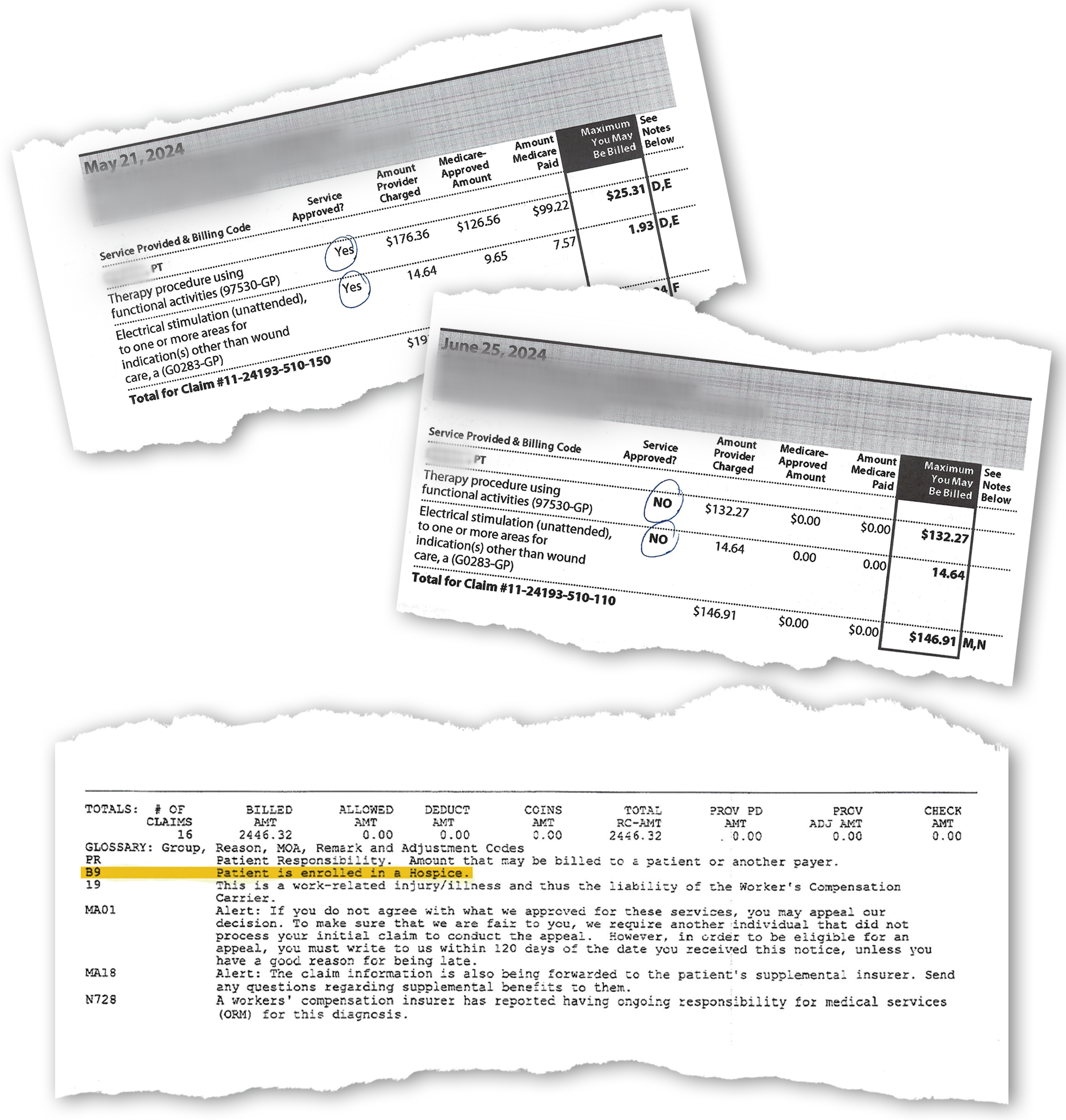
Ianni was initially approved for physical therapy treatments through Medicare. But later, her coverage was denied because she was listed as receiving hospice care, and the services were deemed not covered — even though she was not, and has never been, in hospice.
Medicare is federally administered, and hospices must be certified for reimbursements. But the state issues the licenses for hospices to operate.
Three years ago, California’s state auditor sounded the alarm that Los Angeles County had seen a 1,500% increase in hospice companies since 2010 – more than six times the national average relative to its elderly population.
Auditors estimated LA County hospices overbilled Medicare by $105 million in a single year. The report called out notable red flags – key warning signs of fraud:
- Multiple hospices in one building
- Geographic clustering
- Low patient counts
- High rates of terminally ill patients later discharged alive
- Excessive billing
- Staff shared across multiple companies
The state says it proceeded to investigate and revoke the licenses of 280 hospices.
But since then, the problem has continued to fester. CBS News examined the business and financial records of every hospice currently operating in LA County, applying the same indicators identified by the state. Indications of fraud have not stopped. In fact, they’ve grown.
The CBS News analysis reveals that over 700 of the roughly 1,800 hospices in LA County, trigger multiple red flags for fraud as defined by the state.
California is confronting this problem as Gavin Newsom, its Democratic governor, eyes a potential presidential run. Fraud in public services has become a thorny political issue. Republicans and an army of social media influencers have seized on the issue as politically potent – accusing Democratic state executives of failing to prevent costly schemes, most notably in Minnesota, where the Feeding our Future pandemic relief scam cost taxpayers hundreds of millions. Minnesota’s Democratic governor, Tim Walz, announced in January that he would no longer seek reelection amid fallout from that scandal.
CBS News reached out to Governor Newsom’s office. A spokesperson sent us a January 2026 statement, which reads in part, “Under Governor Newsom’s administration, California has cracked down on hospice fraud, launched partnerships across state agencies, and the California Department of Justice has arrested criminals to hold them accountable.”
Hospice fraud is a nationwide problem. The U.S. Department of Health and Human Services Office of the Inspector General reported in 2023 that suspected hospice fraud amounts totaled an estimated $198.1 million.
There are about 1,800 licensed hospices in Los Angeles County, California, which is more than six times the national average for the county’s senior population.
A CBS News investigation found about 42% (742 companies) still operate despite having multiple signs the state has outlined as indicators of fraud.
Nearly 500 hospices are operating within a 3-mile radius, the densest concentration of agencies in the county.
There are 137 hospices operating along Van Nuys Boulevard alone. More than half of them show signs the state has outlined as indicators of fraud.
89 companies are registered to a single building in Van Nuys.
72 have multiple signs the state says could indicate fraud. It’s the most extreme case of hospice clustering CBS found.
But it is unclear if all of those companies are actually providing hospice care. The building owner’s records indicate only 12 hospices active in the building — raising questions about what advocates call “ghost hospices.”
“I have a paragraph in my leases that they have to do legit business,” the owner told CBS News. “If there is a fraud, I would immediately terminate.”
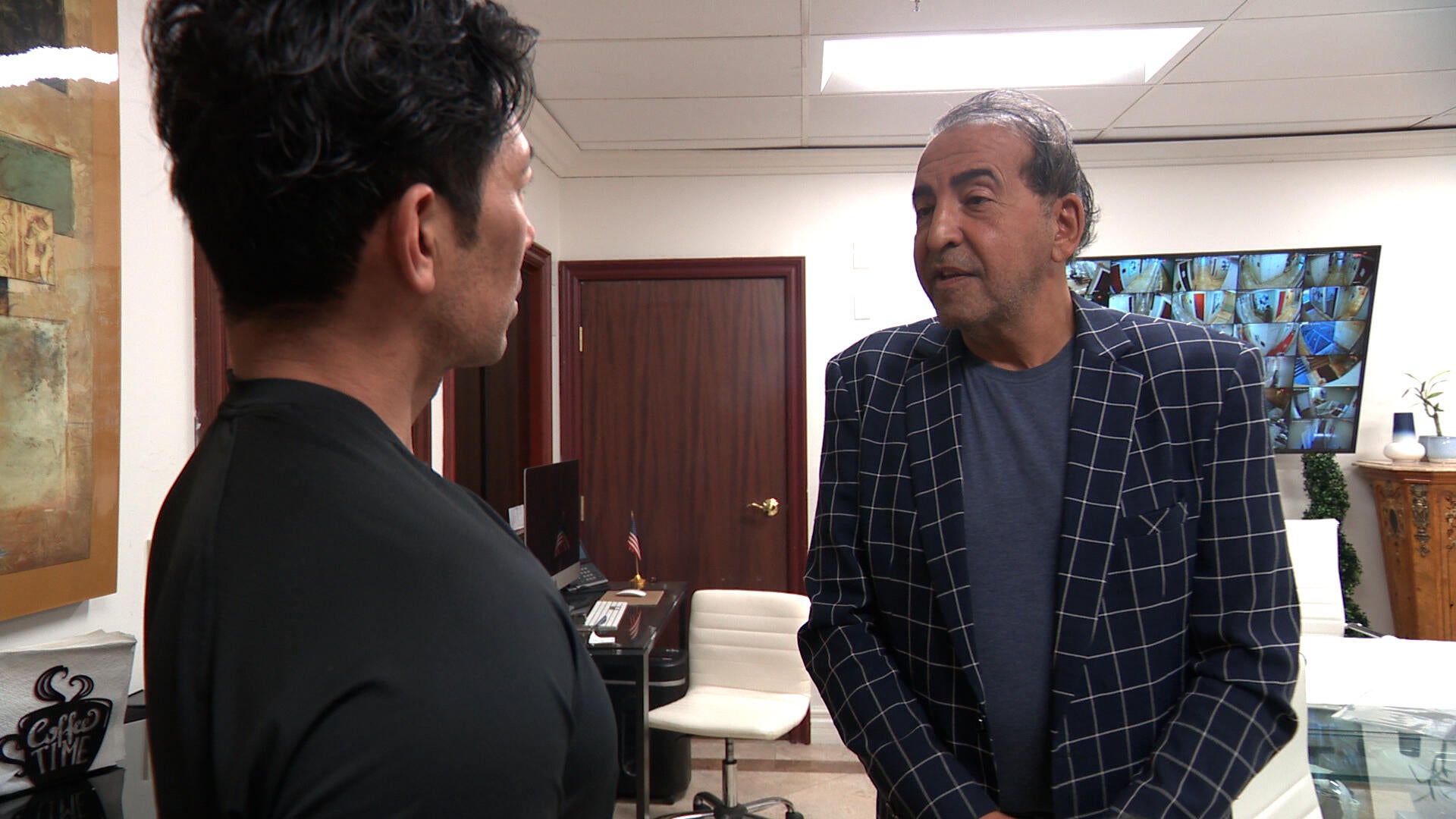
Kambiz Merabi is the owner of the Friar St. building in Van Nuys where 89 hospice agencies registered. Merabi told CBS News he only has 12 hospice tenants - a discrepancy of 77 companies.
Federal inspection records show regulators visited multiple suites in the Van Nuys building between 2021 and 2025 and found deficiencies. Nearly 40 companies in the CBS News analysis, for instance, share key personnel.
State auditors consider the overlap of administrators, medical directors or owners between multiple companies a potential red flag because “it raises questions about whether they are actually participating in the operations of any or all of those agencies.”
CBS News reached out to the 56 hospice offices whose state and federal data indicate they have five or more red flags. Many of the phone numbers were either disconnected or went straight to voicemail. One instructed the caller to text a different number, which turned out to be invalid. At several of the businesses, however, the representatives who answered the phones denied any fraud and told CBS News they run legitimate hospices that serve real patients. They objected to any allegation they are part of the fraud in the hospice industry.
“I am hardworking and have been all my life,” a representative of Mimas Hospice and Palliative Care said, noting his company recently passed a federal review of their work. “It’s so upsetting. You can talk to me by phone. You can come and meet me.”
Medicare is a taxpayer-funded program. Americans pay into it through taxes on their paychecks and premiums. When there’s Medicare fraud, it’s tax dollars that are going to waste.
Nationwide, the average amount a hospice bills Medicare per patient is $13,200. CBS News found the typical hospice in LA County billed Medicare roughly $29,000 per patient – more than double the national average. The highest rate billed by a single hospice in the county was $74,000 per patient.
Of the LA County hospices with available Medicare data, nearly all of them submitted bills above the national average.
CBS News spotted seven instances in which hospices that reported an average of zero patients in 2024 still submitted bills to Medicare.
According to California’s state audit report, a concentration of hospice providers in a small area can be considered a warning sign for fraud: “large clusters of providers in one location suggest that the supply of providers may exceed the patient needs in that location.”
“The providers may actually be billing for services to patients not located in the area or who are not eligible for hospice services,” the auditors wrote in their 2022 report.
“Ground zero” for hospice fraud
Sheila Clark, a hospice patient advocate, said she considers Victory Boulevard to be ground zero for hospice fraud.
“You can’t throw a rock without hitting [a] hospice,” Clark said, driving down the boulevard.
Data for one agency, VML, triggered all six state fraud indicators in CBS News’ review, while billing roughly $49,000 per patient, which is about three-and-a-half times the national average. It shares a building with other hospices, and its key personnel overlap with multiple companies.
When CBS News visited the office building where VML was located, it appeared no one was in. Mail could be seen piled at the door.
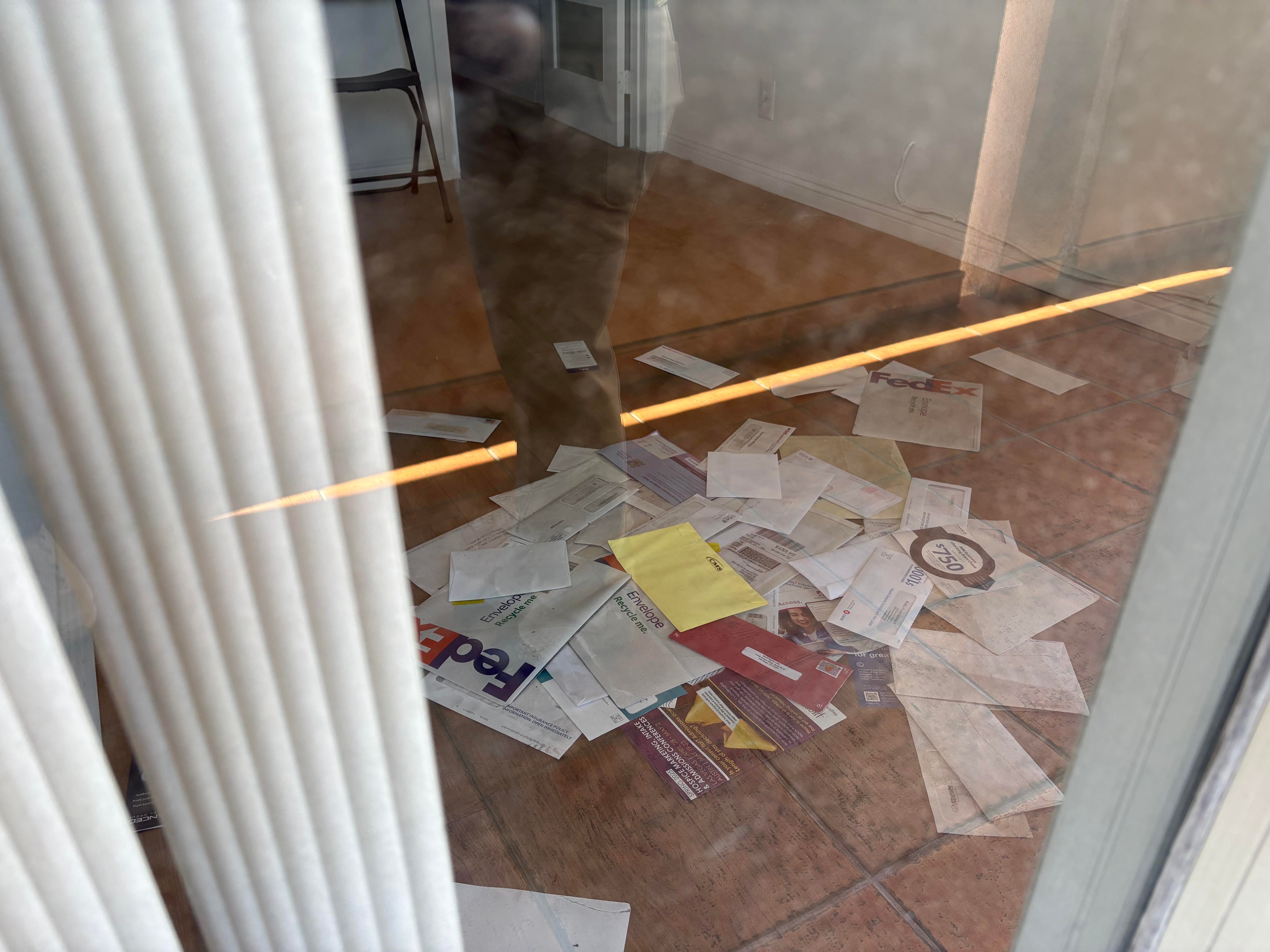
When CBS News tried to visit VML Hospice, which triggers all six of California’s fraud indicators in our analysis, a pile of unopened mail was sitting just inside the door. This included one piece from the Centers for Medicare and Medicaid Services.
VML stopped billing Medicare in 2024, but its license remains active and it is still federally certified. When it stopped seeing patients, records reviewed by CBS News show the provider’s caseload was moved to other hospices. Right next door was World Health Hospice, Inc., another hospice that triggered five of six state indicators of potential fraud, based on the state’s definitions. When CBS News visited that neighboring hospice office, no one answered the door. Phone calls went unanswered and messages couldn’t be left, because its voicemail had not been set up. That agency had been in operation since 2021, according to state records.
State auditors analyzed other urban areas across the state, including Sacramento, the Bay Area and San Diego, but did not find clusters similar to those found in LA County.
Using state licensing records, CBS News found 75 people simultaneously employed at five or more hospice companies in LA County. In the most extreme case, a single medical director has been listed as working simultaneously at 45 different hospices. The state audit said the medical director’s responsibilities are so great, it would be difficult to hold that position at so many companies.
The report also questioned whether one person could serve multiple hospices as administrator, finding each position requires 20-40 hours per week, making it virtually impossible to run more than two or three agencies at once.
What is the state doing?
Though Medicare is federally administered, the state licenses hospices to be able to operate.
None of the hospices flagged in the CBS News analysis turned up in California’s enforcement actions database. Since 2022, when the state published its audit report, California’s Department of Public Health has issued enforcement actions against seven hospice facilities statewide — despite the state auditor warning that fraud was rampant.
State attorney general Rob Bonta says his office has brought criminal fraud cases against more than 100 defendants in the hospice industry and about two dozen civil cases. But he acknowledged that more needs to be done.
“We need to be responsive to the red flags and react to them, not just count them,” Bonta said. “Our main lane is the accountability side, the criminal investigations, the civil investigations. That’s after the damage is done though, unfortunately.”
A moratorium on issuing new hospice licenses in the state was recently extended through January 2027, because the state missed its deadline to enact new emergency regulations for hospices. Public health officials told CBS News they are balancing public feedback to vet new applicants and hold hospices accountable.
Bonta said multiple agencies are working on a task force to target the problem.
“So to the citizens that remain frustrated, I understand, I share your frustration, please know that we have increased our efforts,” he said. “We’re working overtime on prevention and accountability, and we will continue until hospice fraud in California is rooted out.”
For Ianni, the pickleball player whose physical therapy was stymied because she was fraudulently enrolled in hospice care, the state’s efforts to stem the problem came too late.
“That’s why you have health insurance of any kind,” Ianni said. “And just to think you were literally without coverage because of some ridiculous fraudulent thing.”

Explore more:
Comments:
comments powered by Disqus