Cartel kingpin killed, but cycle of violence continues

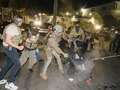
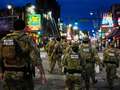
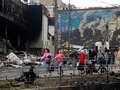
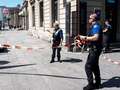
On Sunday, following a military operation to kill one of the country’s most notorious drug traffickers, clashes erupted across Mexico, resulting in dozens of deaths and creating shocking images of roadblocks, armed men in the streets, and panicked civilians seeking cover.
Within hours of the operation in which troops killed cartel boss Nemesio Oseguera Cervantes, known as “El Mencho,” in a rural hideout outside Guadalajara, gunmen loyal to his Jalisco New Generation Cartel group took to the streets of several cities, burning buses and firing automatic weapons.
“The city was completely emptied,” said David Mora, an International Crisis Group analyst who happened to be in Guadalajara on Sunday, describing the aftermath of the violence. “It was a ghost town — there was no one on the streets yesterday.”
The fighting left at least 70 people dead, including 25 members of Mexico’s National Guard, which carried out the mission with intelligence assistance from U.S. military and law enforcement counterparts, according to President Claudia Sheinbaum.
“The country is at peace,” Sheinbaum said at her daily press conference Monday. “It’s calm.”
The wave of violence occurred amid an aggressive pressure campaign by the Trump administration, which for the past year has explicitly blamed Sheinbaum’s government for allowing traffickers to flood the U.S. with fentanyl and other drugs. President Donald Trump has previously suggested that the Mexican government is controlled by trafficking networks and threatened unilateral military action to stop the flow of drugs.
“Going after a big fish like this was kind of an indication of the new framing of this government’s security strategy,” said Mora. “But it also has to do with the elephant in the room, which is the pressure that Donald Trump is putting on Mexico to deliver this.”
Despite Sheinbaum’s unprecedented willingness to hand over high-profile narcos to stand trial in the U.S. — and Trump’s willingness to pardon convicted drug traffickers — Trump has shown little sign of relenting. Even as top U.S. officials took a victory lap and the deadly cost of the operation began to become clear, Trump seemed unsatisfied.
“Mexico must step up their effort on Cartels and Drugs!” he wrote Monday on his social media platform.
In Mexico, however, the death toll, likely higher than reported, and the resulting chaos served as a stark reminder of the heavy price Mexicans pay in a war on organized crime largely dictated by pressure from Washington — even as the paramilitary groups involved are armed with weapons and ammunition from the U.S. and funded by drug users north of the border.
“This is a breakthrough,” said Jesús Esquivel, a journalist with La Jornada and a longtime chronicler of the war on drugs. “But now the question is: What are you going to do to reduce demand and consumption? What are you going to do to stop arms trafficking?”
Grim Repetition
In many ways, the violence on Sunday was a familiar scene. On numerous occasions over the past decade, confrontations with high-profile drug traffickers have resulted in bloody battles with heavily armed paramilitary groups, leaving numerous casualties and paralyzed cities.
Perhaps the most controversial incident of this scale occurred in 2019, when Mexican troops seized Ovidio Guzmán López, the son of Joaquín “El Chapo” Guzmán Loera, only to release him following a siege of Culiacán by gunmen loyal to Ovidio and his brothers.
In previous operations, Mexican troops and Marines have frequently worked with “advisors” from the Drug Enforcement Administration and occasionally with the help of special operations forces and the CIA. Details are still emerging about how the operation unfolded on Sunday, but it appears to have been conducted entirely by Mexican security forces.
“For the first time, I feel proud of the Mexican Army,” said Esquivel. “It’s a message to the U.S. government, and especially to Trump, that we may need your information, but we don’t need you to intervene unilaterally on our territory. We can handle these guys.”
For others, the scenes on Sunday had a grim sense of repetition. It has been almost 20 years since President Felipe Calderón declared war on the cartels, a heavily militarized, U.S.-backed mission that has — despite endless arrests of high-level narcos — done virtually nothing to stem the flow of drugs into the U.S.. Instead, Mexico has faced decades of horrific violence, widespread paramilitarization of drug gangs, and a fractured criminal landscape, turning many areas into low-intensity war zones fueled by U.S.-sourced weapons.
As the smoke clears in Jalisco, there are fears that a familiar pattern will repeat. In instances where a top trafficker was arrested or killed, it has become common for criminal groups to splinter into warring factions, according to Ieva Jusionyte, an anthropologist studying organized crime in Mexico.
“This is a continuation of this militarized approach to organized crime,” said Jusionyte. “With the fracturing of these organized crime groups, there is more violence, but the structure remains intact — the drug demand in the U.S. and the gun supply from the U.S. remain, and in Mexico, the impunity and the weakness of the justice system remain.”

Explore more:
Comments:
comments powered by Disqus